Franchising for Extra Credit: Former Teacher Follows his Business Dream

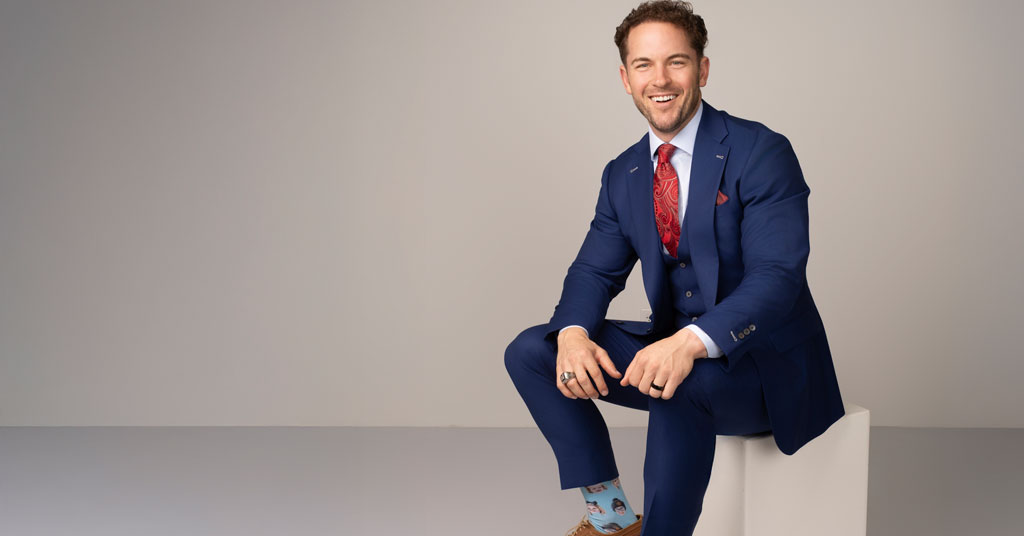
Name: Aaron Gillaspie
Title: President & CEO
Company: Willis Park Corporation dba My Salon Suite Texas
No. of units: 25 My Salon Suite
Age: 38
Family: Wife and 3 kids
Years in franchising: 10
Years in current position: 10
Before becoming the largest franchisee in the My Salon Suites system, Aaron Gillaspie learned the value of hustle, research, and adaptability when pursuing his first career.
A walk-on football player at the University of Nebraska, he graduated with a bachelor’s degree in entrepreneurship management. He was told that he would have to start college over to get the credits to become a coach or athletic director. Instead, he made a hard pivot and took a job as a Teach For America Corps member. As part of the program, he founded the seventh-grade math program at Bedford Stuyvesant Collegiate Charter School in Brooklyn despite never having taught a day in his life.
Several years later, he founded Brilla College Prep School in the Bronx. To learn how to build a school from scratch, Gillaspie visited 150 schools in 22 states over the span of six months to study the best practices and challenges of leading high-performing urban charter, private, and public schools across the country, he says. Among many other responsibilities, he came up with the name, curriculum, policies, and even uniforms for the school.
“It was my R&D plan: rip off and duplicate,” Gillaspie says. “I didn’t know it at the time, but it was Franchising 101 when you look at how we built, replicated, and scaled the concept. It was the epitome of franchising.”
He loved educating young people, but when a mentor asked what he wanted in life, Gillaspie reevaluated his goals. He decided it was time to step away from teaching and into business ownership.
Once again, Gillaspie had to overcome his lack of experience. This time, he had to learn how to be an entrepreneur. Rather than going it alone, he leaned into franchising and its proven business model. Much like his six-month study to research founding a school, Gillaspie immersed himself in the franchise process by meeting with franchisees and franchisors, attending discovery days, and reading more than 100 FDDs.
He first bought the rights to three Hand & Stone Massage and Facial Spa units in 2015 and followed that up by becoming the first franchisee to sign a 10-unit deal with My Salon Suite later that year. He opened one Hand & Stone unit but later sold it. Today, Texas-based Gillaspie owns 25 My Salon Suite locations.
Gillaspie was drawn to the real estate aspect of My Salon Suite ownership, which provides turnkey salon suite studios to beauty, health, and wellness professionals by giving them a personal space to build their businesses. He says the franchise’s concept empowers members to be their own bosses, giving them the tools and resources needed to open, build, and manage upscale businesses.
After a decade of franchise ownership, Gillaspie is focused on the continuous growth and development of the business. He wants to double the number of locations to reach 50 units in the next three to five years. It’s an ambitious goal, but Gillaspie is confident.
“I was 22 when I was principal of a school and 27 when I opened my first franchise location,” he says. “I love proving people wrong. When they say something can’t be done, I say, ‘Why not?’”
PERSONAL
First job: I’ve had jobs since I was 9 years old, and I haven’t known anything different. My first job was working at a snack bar and as a lifeguard intern while in elementary school. I later went on to trim trees and have a newspaper route.
Formative influences/events: Playing football at the University of Nebraska shaped my discipline, and teaching seventh-grade math in New York taught me the importance of empathy. Somewhere between those two experiences, I realized leadership is equal parts grit and heart.
Key accomplishments: Founder of My Salon Suite’s “Suite Relief,” a program that has raised more than $2 million for incredible programs such as St. Jude Children’s Research Hospital and has evolved to include disaster relief fund grants and scholarships for our existing member base. I was also the founder of Brilla College Prep School in New York.
Biggest current challenge: Finding the 25th hour in the day. When you run a growing company with three kids at home, the calendar doesn’t lie. Customer acquisition is also a moving target with online algorithms changing every five minutes, and construction costs seem to only increase.
Next big goal: Our goal is to have 2,500 independent salon, spa, beauty, and wellness professionals running their businesses inside our walls in Texas. That’s 2,500 people betting on themselves and winning. To meet that goal, we would need to slightly more than double the number of our operating units in the next three to five years.
First turning point in your career: A mentor once sat me down and asked, “What do you actually want out of life?” That one question forced me to face the gap between what I said I wanted and how I was living, and it changed everything for me. That is when I decided to shift from an education career in New York to owning a business and planting roots near family in Texas.
Best business decision: Hiring our COO before we could afford one. We run on the Entrepreneurial Operating System (EOS), and I realized I’m the visionary, not the integrator. Letting someone else steer while I chart the map was a game changer.
Hardest lesson learned: We once had five concurrent construction projects across four cities, and it was total chaos. I learned fast that relationships don’t protect you if your contract doesn’t. Everything can be fine until it isn’t. Contracts matter, and you don’t always control as much as you think, so plan for the unexpected.
Work week: I’m up at 5 a.m. every day to train. Emails start at 7 a.m. Meetings and the rest of the workday go from 8:30 a.m. until 5 p.m. I make time with the family until 8 p.m. and return to work, depending on what’s on fire. I go to bed around 11 p.m.
Exercise/workout: I lift four days a week, go to Orangetheory twice per week, and do recovery work weekly. I clock about 15,000 steps a day and have a love-hate relationship with the cold tub!
Best advice you ever got: “Be like Reddi-wip: Stay cool, but don’t freeze.” This is still my favorite business metaphor.
What’s your passion in business? Helping things grow, whether that’s people, ideas, or impact. I love watching others level up.
How do you balance life and work? There’s no balance, only integration. Sometimes, it’s 80% work, 20% family; other times, it flips. I bring my family into my work world and try to stay fully present wherever I am. I say it’s not balance but more like work-life integration.
Guilty pleasure: Chair massages. In New York, you could get them in five-minute increments. They are the cheapest energy boost out there.
Favorite book: I cheat. I listen to three Blinkist summaries a week and then pick the ones worth the full read. I’m a huge Malcolm Gladwell fan.
Favorite movie: I have two favorites, “Remember the Titans” and “Shawshank Redemption.” Both are about grit and redemption, which sums up entrepreneurship.
What most people don’t know about you: I’m a picky eater: medium-well steak and sushi only if it’s cooked. I don’t want my food mooing or swimming.
MANAGEMENT
Business philosophy: High standards, disciplined growth, strong people, and clear decision-making. Build systems, empower leaders, protect margins, and never shy away from the hard conversations.
Management style or style: Warm/strict. Visionary. People need to know you care and that you’ll hold them accountable. That combination worked in classrooms and still works in business.
Greatest challenge: Leading while letting go. As a founder, you start by doing everything yourself. The real test is learning to trust others to do it.
How others describe you: The Energizer Bunny. Talks a lot. Authentically himself. Coach.
Have you ever been in a mentor-mentee relationship? What did you learn? I live by “Have a lifeline, be a lifeline.” I’ve had mentors since college; Coach Tom Osborne’s TeamMates Mentoring Program was the start. Now, I mentor athletes at the University of Houston, and they mentor my kids. It’s a full-circle thing. Everyone needs someone pulling them up and someone they’re pulling up.
One thing you’re looking to do better: Slow down long enough to celebrate wins before sprinting to the next challenge.
How you give your team room to innovate and experiment: We encourage people to fail forward. Just don’t fail the same way twice.
How close are you to operations? Still in the trenches for big decisions like buildouts, capital spending, and major strategy. But my team runs the show daily. The hardest part was realizing that if I stay too hands-on, I’m actually holding them back.
What are the two most important things you rely on from your franchisor? Vendor management and updated brand standards.
What you need from vendors: Partnership, not transactions. We don’t need order takers; we need teammates.
Have you changed your marketing strategy in response to the economy? How? We’ve had to evolve fast; digital costs more and converts less if you don’t adapt. We’ve leaned into storytelling and community content instead of just ads.
How is social media affecting your business? Social media has a major impact on our business because our beauty professional customers essentially live on those platforms. It’s where they market themselves, connect with clients, and build their brands, so we must show up authentically in those same spaces.
In what ways are you using technology (like AI) to manage your business? We use technology to forecast, map sites, and manage growth, but at the end of the day, relationships still win. AI doesn’t replace a handshake.
How do you hire and fire? Hire slow, fire fast. We use the Predictive Index plus live trials. Everyone says they want to win. When you hand them the playbook and workout schedule, the truth shows up fast.
How do you train and retain? We have a strong hands-on 30–60–90 plan with checkpoints. It’s not just, “Here’s your login.” It’s coaching, feedback, and fit for all parties.
How do you deal with problem employees? Daily feedback. No one should ever be surprised in a review. We coach live, not once a year. If that doesn’t work, we’ve used documented performance plans to help people land where they fit better.
Fastest way into your doghouse: Lie. Hide problems or wait until it’s too late to fix them. Toothpaste is very hard to get back in the tube.
BOTTOM LINE
Goals over the next year: Keep growing same-store performance while ramping new ones. We’re also eyeing five to 10 units for smart acquisitions in 2026.
Growth meter: How do you measure your growth? Happy customers, happy team members, more stores, healthy margins. That’s our scoreboard.
Vision meter: Where do you want to be in five years? 10 years? 2,500 independent business owners thriving inside our Texas walls.
Do you have brands in different segments? Why/why not? We used to own a Hand & Stone Massage and Facial Spa but sold it before Covid-19. We would consider new verticals if they fit our system and geography, but the model needs to fit—no random side quests.
How is the economy in your region(s) affecting you, your employees, your customers? Texas is still strong, but the costs to build are up. The math on new locations is tighter, so we must be sharper.
Are you experiencing economic growth in your market? The beauty industry as a whole is expanding, and we’re seeing more people pursue the freedom and flexibility that entrepreneurship can offer. That growth creates exciting opportunities for our business. At the same time, we’re realistic about the challenges. There is increasing market saturation, and broader economic factors such as real estate prices and construction costs directly impact the viability of our model and the pace at which we can expand.
How do changes in the economy affect the way you do business? Buildouts cost more, and members’ clients may stretch appointments from every six weeks to every eight. We focus on helping our members weather those shifts.
How do you forecast for your business? Our finance team tracks trends and performance by site. We also map potential locations with data overlays to make smarter bets.
What are the best sources for capital expansion? It varies greatly. We look at every option. We often look at third-party lenders, and it can also be advantageous to work with local banks.
Experience with private equity, local banks, national banks, other institutions? Why/why not? It is very difficult to project only one avenue. We keep a steady pulse on each option. We gain knowledge on all of them, so when we need to scale, we are prepared for each.
What are you doing to take care of your employees? We have quarterly bonding and development days designed to give employees space to connect beyond day-to-day tasks. We also make a point to celebrate milestones, both personal and professional, because recognition matters. Even as a smaller organization, we’re committed to building a robust, all-in benefits package, and we provide performance-based bonuses to keep our compensation aligned with the results that our employees drive. We want our employees to feel supported, appreciated, and excited to grow with us, and we’re constantly looking for new ways to enhance that experience.
How are you handling rising employee costs (payroll, minimum wage, healthcare, etc.)? Healthcare is the hardest cost to predict. You pay more and somehow get less. Every year, it’s a new game with new rules. You are in no-man's-land when you are under the strict mandates.
What laws and regulations are affecting your business, and how are you dealing with them? There are not as many in the state of Texas. One of the hardest things is the regulations around HVAC and refrigerant levels in our locations. That is the same with energy codes. Some get grandfathered in. It has been interesting to watch.
How do you reward/recognize top-performing employees? We do shout-outs, random acts of kindness, and incentives that actually mean something to that person, not cookie-cutter rewards. It’s about making people feel seen.
What kind of exit strategy do you have in place? We operate like we could sell tomorrow with clean books and tight systems. But I’m not going anywhere. The next seven to 10 years are about seeing how far we can grow the business.
Share this Feature


Recommended Reading:


Franchising.com is produced by Franchise Update Media. Franchise Update Media has its finger on the pulse of franchising with unrivalled audience intelligence and market driven data. No media company understands the franchise landscape deeper than Franchise Update Media.
1201 New York Avenue NW, Suite 300A
Washington, DC 20005
PH. (408) 402-5681
 The multi-unit franchise opportunities listed above are not related to or endorsed by Multi-Unit Franchisee or Franchise Update Media Group. We are not engaged in, supporting, or endorsing any specific franchise, business opportunity, company or individual. No statement in this site is to be construed as a recommendation. We encourage prospective franchise buyers to perform extensive due diligence when considering a franchise opportunity.
Copyright © 2001 - 2026. All Rights Reserved. Legal Notices | Privacy Policy


