Aiming High: Third-Generation Veteran Finds Purpose in Senior Care

Name: Rick Cseak
Title: CEO and President
Company: Seniors Rock Inc. dba Home Helpers Home Care of Denver, CO
No. of units: 8 Home Helpers Home Care
Age: 64
Family: Partner, Marty, niece, Kirsten, nephew, Corbin, pup, Cooper
Years in franchising: 24
Years in current position: 17
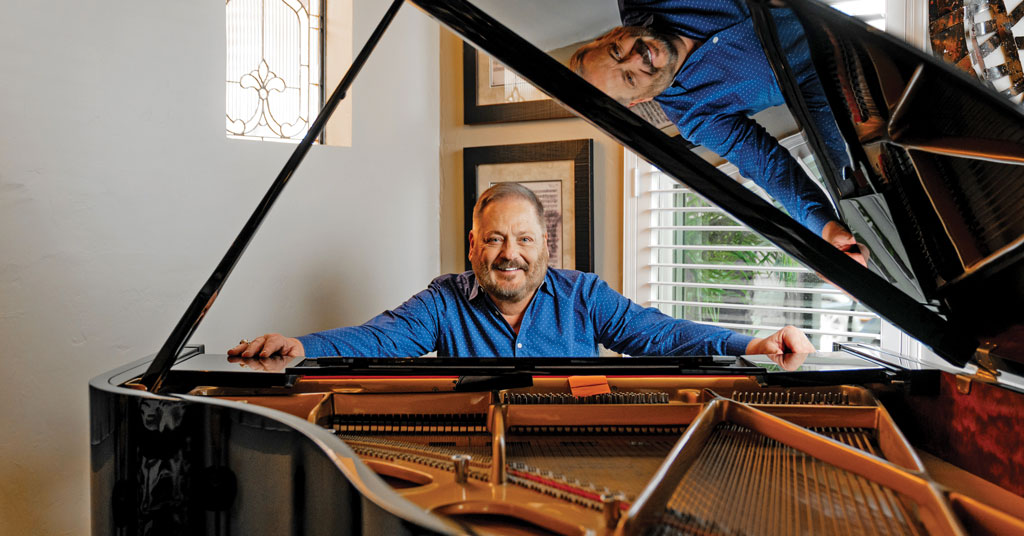
Rick Cseak is the Veteran Entrepreneurship MVP (Most Valuable Performer) for outstanding performance, leadership, and innovation by a military veteran.
Rick Cseak’s family instilled in him a strong sense of commitment and dedication early in life. Now, he applies the values he learned as a multi-unit owner with Home Helpers Home Care.
Cseak’s grandfather was stationed in Pearl Harbor, Hawaii, when the base was attacked in 1941. He went on to fight in WWII and serve as a driver for Gen. George S. Patton. Cseak’s father served as a pilot in the U.S. Army, flying helicopters in Vietnam.
When it was time for college, Cseak enrolled in the U.S. Air Force and served for four years in the Electronic Security Committee Command in Japan and Texas. In that role, he worked with every branch of the military and the country’s allies to track airplanes and communications from all over the world.
In his final year of service, Cseak joined the prestigious Tops in Blue touring performance ensemble, comprised of active-duty members of the Air Force. Cseak’s role as a male vocalist on the tour was a perfect combination of performance and military service. During his year with the 10-person group, Cseak traveled to 29 countries, performing for troops and setting up and breaking down 20,000 pounds of equipment before and after each two-hour show.
“It was the best year of my life. I traveled all over the world representing the U.S. Air Force,” says the Veteran Entrepreneurship MVP. “Some of my favorite memories were looking out in the audience with many people who were away from their families and their kids and being able to make an impact on their lives. It was a dream come true for me. It was kind of my Broadway show in the military.”
When it was time to transition to a civilian career, Cseak sought a path that would provide purpose and fulfillment. He says “a light went on” after starting a position as a marketing manager with an in-home senior care company, which led to his becoming a franchisee with Home Helpers Home Care in 2008. He now operates eight locations in the Denver metro area.
Cseak strongly believes in the franchise’s mission to help seniors remain independent in their homes. He sees it as an extension of the values of service and commitment to others that he learned through his family and military service. He is grateful that he and his 150 employees have been able to provide in-home care for thousands of clients over the years.
“I tell a lot of people that about 90% of Americans will say that they don’t love their job,” Cseak says. “I think we’re in an industry where, if you have the passion and the heart for helping seniors remain independent in their homes, you can love your job.”
MVP QUESTIONS
Why do you think you were recognized with this award? Persistence in the in-home care industry, dedication to our brand, and helping others. As a third-generation veteran, these traits are part of our family value system. As I have built my team, we have also been able to expand our territories and, as we continue to grow, keep an intimate and family atmosphere with our clients and employees.
How have you raised the bar in your own company? By giving the same energy and commitment to my team, my employees, and my franchise system. It is all about giving back. What I give comes back tenfold.
What innovations have you created and used to build your company? I stay involved with the Home Helpers national support center and, for several years, was active in the Home Helpers Innovation Council. Many of our platforms, vendor relations, and training ideas came out of our council, which brings innovative ideas to franchisees nationwide.
What core values do you think helped you win this award? I have embraced our culture, practicing what I preach. The folks who have been there and behind me know I have had a long commitment to our team and our mission of helping seniors remain independent and in their homes.
How important is community involvement to you and your company? It is 100% of what we do: being involved, giving back, and building trusted relationships with others who are making a difference.
What leadership qualities are important to you and your team? Communication, integrity, and dedication to what we do together and what I do for my team and customers.
PERSONAL
First job: Selling jeans at The Gap when I was 16.
Formative influences/events: My grandparents and parents, who taught me the value of hard work and loving what I do.
Key accomplishments: Serving in the Air Force and doing a tour with the Tops in Blue, the Air Force touring entertainment group, around the world. I formed friendships and collaborated with people I care about.
Biggest current challenge: Navigating the quick changes as the home care industry is growing quicker than it ever has. The “Silver Tsunami” is here. In the U.S., we grew from 44 million to 58 million seniors over 25 years from 2000 to 2025. With an additional 40% growth of seniors in the next five years, we will see 77 million seniors living in America by the year 2031.
Next big goal: Continue educating and training the next generation of leaders who will care for our growing senior population.
First turning point in your career: In the late 1990s, I was blessed to have worked with a couple of entrepreneurs who took an interest in me, believed in me, coached me, and changed my life and direction.
Best business decision: Being persistent and staying with a brand that holds the exact or similar values I have.
Hardest lesson learned: Always surround yourself with the best people. Early on, I made some mistakes, and I learned it is best to follow your heart and your intuition to surround yourself with amazing, caring people.
Work week: 30 to 35 hours a week. I aim for a work-life balance.
Exercise/workout: I recently started working with a trainer/coach three or four days a week.
Best advice you ever got: Joe Sanders, a CEO with another in-home senior care service, once told me, “Treat your customers like they are No. 1 and your employees like they are A+.”
What is your passion in business? Changing someone’s life and making a difference. That can be through our work in helping someone’s mother remain independent or be a part of changing the lives of our 150 employees and their families.
How do you balance life and work? You must set your priorities. Work, family, friends, and balancing these with things that truly make you happy. It took me a lot of time to get there, and it is something I learned later in my career journey.
Guilty pleasure: Crème brûlée.
Favorite book: A River Runs Through It, which reminds me of my dad.
Favorite movie: “The Sound of Music,” which reminds me of my mom.
What do most people not know about you? Early on, I worked in the music industry. I lived in Nashville for a few years, and I had a band and traveled nationally.
Pet peeve: When I get a voicemail that says, “I’m unavailable.”
What did you want to be when you grew up? A musician and a singer/songwriter.
Last vacation: Puerto Vallarta, Mexico, in February.
Person you’d most like to have lunch with: Dolly Parton. I identify with the life stories that she puts into song.
MANAGEMENT
Business philosophy: Always give what you expect from others. By taking care of others, doing the right thing, and always remembering that we are all part of the greater good.
Management method or style: Ongoing. My method centers around total quality and company-wide focus on doing the best job we can. Our company works together, knowing it takes a village to give our best.
Greatest challenge: Letting go. I’m not a micromanager, but I want to make sure our customers are getting the best service available. I’m the shepherd watching over my flock, the management team. The hardest thing for me has been letting go and holding them accountable, knowing they’re going to do it a different way than I do. It can be neat to stand back and watch others doing something differently. It is a healthy thing for a franchise owner.
How do others describe you? Enthusiastic, dedicated, and loyal to all.
Have you ever been in a mentor-mentee relationship? What did you learn? Yes. I love mentoring, coaching, and growing with others, whether it is my team or coaching and mentoring with a new Home Helpers Home Care owner. What I have learned most is that I gain as much back. It is a reciprocal mentoring process. I’m always open to learning more.
One thing you are looking to do better: Take better care of myself. Taking care of others means putting yourself at the top of the pyramid when it comes to your health.
How you give your team room to innovate and experiment: My team meets together weekly and monthly within their department. Our goal truly is not to compete with other home care companies but to compete within ourselves and improve our systems and customer service each month. I let each member bring ideas, innovation, and their energy to the table.
How close are you to operations? I am always available. Through the years, as I have delegated tasks and built up my team, I have maximized efforts by letting key managers oversee their departments. We meet weekly and monthly, and I am here in the office/training center 30 hours on average each week.
What are the two most important things you rely on from your franchisor? To be informative to all franchisees and to continually push the envelope so that we are always knowledgeable about our industry.
What you need from vendors: To deliver quality service and products and stand behind what they say they are going to do.
Have you changed your marketing strategy in response to the economy? How? Somewhat. You must be spot on and pinpoint each decision. Our strategy includes honing our outside sales relationships so that we are the choice for those who can best use our services.
How is social media affecting your business? I am still working on this, but it is more important each day and a major part of relationship building.
How are you using technology, like AI, to manage your business? This complements the intimacy of home care. We are constantly bringing more AI technology into our operations and using it as a tool to sharpen our efforts.
How do you hire and fire? Whether it’s a new manager or a member of our care staff, hiring is a very thorough and engaging process. We look for integrity, heart, and a sense of loyalty to our mission of helping others. Interviews, training, and relationship building all focus on these qualities. Firing is rare in both areas, but if the loyalty, heart, and ethics to the mission are not there, it is not a good fit in our business culture, and we will caringly and quickly let go of an employee.
How do you train and retain? Training is the most important aspect when a new employee joins our team. In addition to company culture, processes of taking care of others, and opportunities to gain knowledge and education, training is a commitment to having the best employees. They all appreciate it when you go the extra mile. Retention of employees focuses on continual training, caring for all your employees, a hug, a bonus, and recognition. They need to feel as important as your customer. We are all customers.
How do you deal with problems with employees? We follow what we call Conduct 1-2-3. This involves having a conversation, meeting one-on-one, and making the best effort to fix the problem or issues. Listening often opens understanding. If the problem continues, we will let them go, knowing it is not a good fit and does not benefit them, our client, or the team.
Fastest way into your doghouse: Doing the wrong thing and not caring that you did it.
BOTTOM LINE
Annual revenue: $5 million.
2026 goals: Continue to advance and build internal leadership within my team. My financial goal is to reach $6.5 million in revenue in 2026.
Growth meter: How do you measure your growth? By the number of clients we are serving and by hitting revenue growth goals each year. Additionally, the more my team takes off my operations plate, that’s growth for me.
Vision meter: Where do you want to be in five years? 10 years? In five years, having a team that is running full operations 100%. In 10 years, living in Italy part-time.
Do you have brands in different segments? Why/why not? I do not. My philosophy as a home care agency is to do what we do well and dedicate ourselves to those we serve and those who serve you.
How is the economy in your region(s) affecting you, your employees, your customers? All of us are watching the U.S. economy. As the demand for in-home senior care increases with 77 million seniors in the U.S. by 2031, we are finding ways to be creative so that folks can afford care. We must reward our employees with above-industry pay and benefits. We also look for other ways to elevate our appreciation for them for the intimate/caring work they do.
Are you experiencing economic growth in your market? Yes. The Denver market continues to boom.
How do changes in the economy affect the way you do business? You must stay on it. We are constantly balancing cost and value.
How do you forecast for your business? I have a working business plan that targets my goals as an owner and adjusts and tweaks the numbers quarterly. This helps me to keep an eye on things. I am constantly adjusting.
What are the best sources for capital expansion? By reinvesting profits back into my company, including bank loans, so I have strong margins for dependable growth.
Experience with private equity, local banks, national banks, other institutions? Why/why not? It is okay to use these, but be careful not to bite off more than you can chew. If you feel secure in your growth and opportunities to pay debt off quickly, it may be a promising idea.
What are you doing to take care of your employees? Above-industry pay. I constantly connect with them and treat them as family. We offer both 401(k) and health insurance, and I am a huge believer in all employees having PTO and sick time. Ensuring a work-life balance is important.
How are you handling rising employee costs (payroll, minimum wage, healthcare, etc.)? There is a constant meter to keep your eye on. My best advice is to not ignore employee costs and adjust quarterly/ongoing so that it is not a system shock in one big moment.
What laws and regulations are affecting your business, and how are you dealing with them? I stay actively aware of state and federal legislation changes and issues that protect our seniors and employees. I have accompanied Home Helpers leaders and other franchise owners to Washington, D.C., to meet our legislators. Here in Colorado, I support several organizations involved in what is affecting our seniors.
How do you reward/recognize top-performing employees? Personal recognition, bonuses, a hug, and sharing in the success of our company.
What kind of exit strategy do you have in place? I hope that when the day comes to retire and rewire, I can pass the torch to an individual who brings their added wisdom and knowledge to the table, recognizing the successful culture we have built here in Denver. Whether you are a new franchisee or a seasoned one, an exit strategy should always be part of your business plan, so when the day comes, you are ready.
Share this Feature


Recommended Reading:


Franchising.com is produced by Franchise Update Media. Franchise Update Media has its finger on the pulse of franchising with unrivalled audience intelligence and market driven data. No media company understands the franchise landscape deeper than Franchise Update Media.
1201 New York Avenue NW, Suite 300A
Washington, DC 20005
PH. (408) 402-5681
 The multi-unit franchise opportunities listed above are not related to or endorsed by Multi-Unit Franchisee or Franchise Update Media Group. We are not engaged in, supporting, or endorsing any specific franchise, business opportunity, company or individual. No statement in this site is to be construed as a recommendation. We encourage prospective franchise buyers to perform extensive due diligence when considering a franchise opportunity.
Copyright © 2001 - 2026. All Rights Reserved. Legal Notices | Privacy Policy


