Multi-Unit Franchise Growth: Why Wayback Burgers Owners Keep Expanding

In an era of private equity money and rapid-fire territory sales, Wayback Burgers is growing on its own terms—and it's paying off.
Celebrating 35 years and counting, the fast-casual, fresh burger concept now has roughly 200 locations worldwide, including 160 U.S. restaurants across 35 states. Every one is franchised, and the brand remains independently owned.
A big part of that growth is coming from operators who keep expanding with the system. In a franchise model that has historically sold units one at a time, 47% of Wayback franchisees now own multiple locations.
“We're looking to grow in a smart way with the right people,” says Patrick Conlin, president of Wayback Franchising, LLC. “I can't emphasize culture enough.”
Step inside a Wayback, and the welcoming appeal is immediate. Burgers hit the grill when the order comes in, and milkshakes are hand-scooped with Blue Bunny ice cream into a metal tin and spun on a three-spindle blender. Team members deliver food to the table and greet guests by name. Conlin describes the brand’s food philosophy as “newstalgia, where classic comfort meets modern cravings.”
What guests may not see is just as important: Wayback is strengthening the operational foundation that makes multi-unit ownership easier than ever to scale.
Culture Comes First
The culture Conlin describes isn't new. Since 1991, Wayback's stated mission has been to create a sense of belonging, uniting people through a love of comfort food and the guiding principles of honesty and simplicity.
It starts with finding the right franchise partners. Restaurant experience helps, but plenty of Wayback's operators have come from white-collar careers in finance and other industries. What can't be taught are the soft skills, says Conlin, a big part of what the Discovery Day process is designed to reveal, ensuring both sides are a fit.
“It really comes down to: Are they personable? Can they deal with the public?” Conlin says. “Because once you open your doors, anybody can walk in.”
Wayback also seeks hands-on owners—not franchisees flipping burgers every day, but operators engaged enough to walk into a restaurant, or glance at a camera, and know right away when something is off.
The brand's language reflects the mindset. Wayback doesn't have customers; it has guests. It doesn't have stores; it has restaurants. And the same standard applies to the franchisor-franchisee relationship.
“Our franchisees are our only guest,” says Conlin, who has worked in franchising and the restaurant business since 1985. “We have to treat and service them the same way we coach and teach them to serve the guests in the restaurants.”
Backing that promise is a corporate team that sticks around. Wayback’s leadership bench is stacked with people who have spent seven, 10, 12, and 14 years with the brand and know its history and culture firsthand—a rarity in a sector where franchisor turnover has become routine. Franchisees say it shows, pointing to the support they get from a franchisor that treats them as part of the team rather than transactions.
Beefing Up the Back of the House
While the guest experience stays nostalgic by design, the infrastructure behind it is getting a serious upgrade. Wayback recently signed contracts for a new POS and back-office system and has begun migrating information into it, consolidating data from multiple sources onto a single platform.
“It's going to be a whole new world for our franchisees, both existing and new,” Conlin says. “Operating and managing multiple units is going to become much easier.”
Wayback minimized the cost impact on existing franchisees, and thanks to falling technology prices, new franchisees pay the same or slightly less than the current system. Other platforms, including the brand's review and social listings tool, are covered by the franchisor.
Room to Run
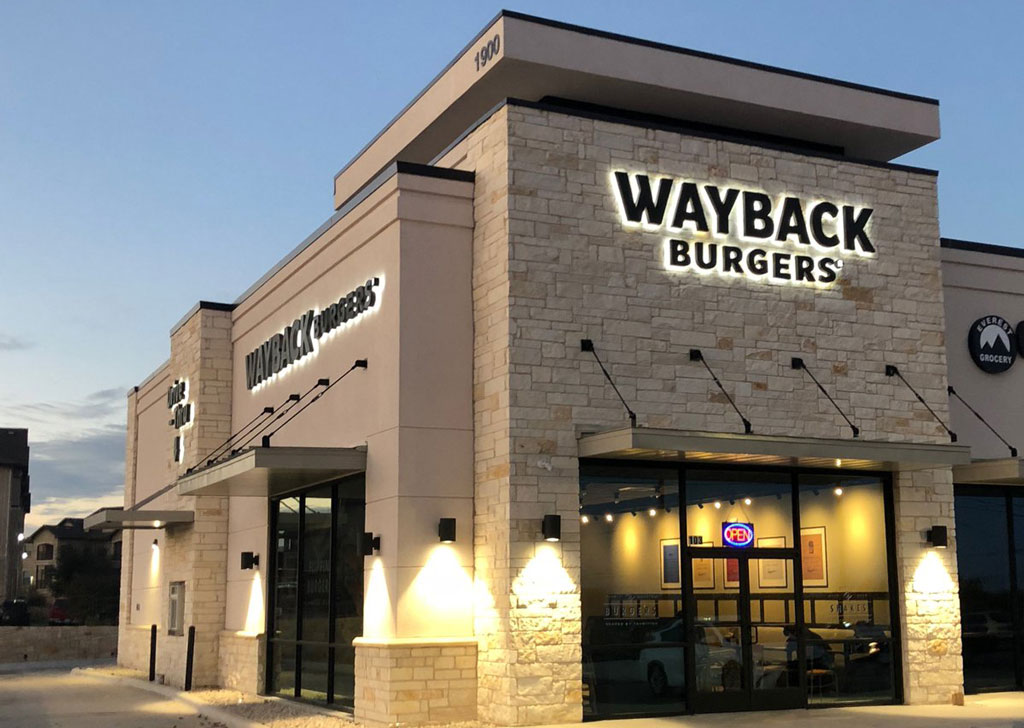
Wayback’s 1,800-square-foot prototype gives franchisees real site flexibility, from in-line shopping centers to freestanding buildings. With no drive-through requirement and no mandatory breakfast daypart, the model also helps keep equipment and labor costs in check.
Growth remains concentrated in the Southeast, Southwest, and Mid-Atlantic, though the brand is continuing to push into new territory. Wayback opened its first Iowa location this year, with Missouri next on deck. Conlin says there is still plenty of white space left on the map, and some of it has opened up in unexpected ways. Wayback had no presence in Utah until a prospect approached the company about expanding into St. George. More Utah restaurants followed. A real estate modeling platform vets every market before a deal is signed.
“We like seeing that internal growth,” Conlin adds. “But we certainly like to bring in new blood too.”
Ready to grow with a brand that puts its franchisees first? Start your journey today at waybackburgers.com/franchising.

SPONSORED BY:
Wayback Burgers
With over 200 restaurants and counting, Wayback Burgers is America's favorite hometown burger joint and one of the world's fastest-growing burger franchises. Learn More
Share this Feature


FRANCHISE TOPICS
- Multi-Unit Franchising
- Get Started in Franchising
- Franchise Growth
- Franchise Operations
- Customer Experience
- Franchise Leadership
- Franchise Marketing
- Technology
- Franchise Law
- Franchise Rankings & Awards
- Franchise Rankings
- Franchise Trends
- Franchise Sales & Development
- Featured Franchise Stories



Franchising.com is produced by Franchise Update Media. Franchise Update Media has its finger on the pulse of franchising with unrivalled audience intelligence and market driven data. No media company understands the franchise landscape deeper than Franchise Update Media.
1201 New York Avenue NW, Suite 300A
Washington, DC 20005
PH. (408) 402-5681
 The multi-unit franchise opportunities listed above are not related to or endorsed by Multi-Unit Franchisee or Franchise Update Media Group. We are not engaged in, supporting, or endorsing any specific franchise, business opportunity, company or individual. No statement in this site is to be construed as a recommendation. We encourage prospective franchise buyers to perform extensive due diligence when considering a franchise opportunity.
Copyright © 2001 - 2026. All Rights Reserved. Legal Notices | Privacy Policy


