Reaching 100: Dunkin' Franchisee Invests in Long-Term Growth

Name: Dave Baumgartner
Title: CEO/Managing Partner
Company: Bluemont Group
No. of units: 100 Dunkin’
Age: 69
Family: Wife, Karen, 3 children, Anna, Laura, and Matthew, and 6 grandchildren
Years in franchising: 16
Years in current position: 16
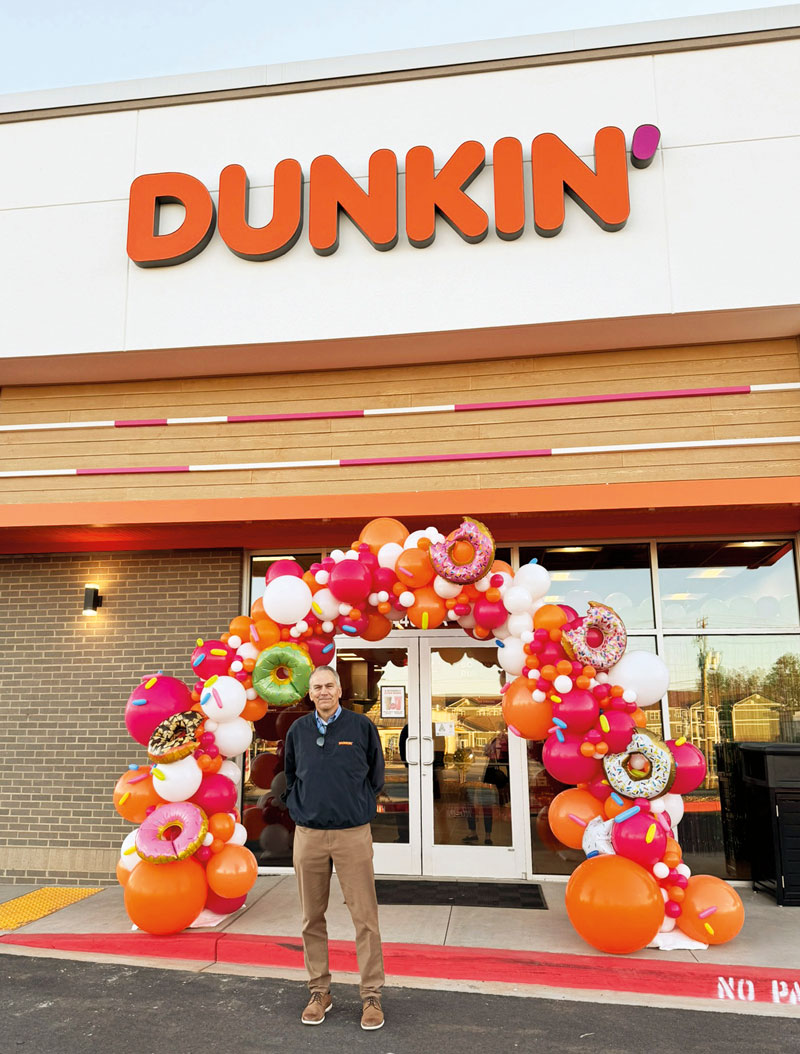
When Dave Baumgartner opened his 100th Dunkin’ location in Chatsworth, Georgia, in March, he achieved a goal he set 16 years earlier as a first-time franchisee. Starting with a single store in Hixson, Tennessee, in 2009, Baumgartner and the Bluemont Group have steadily built a growing Dunkin’ empire.
After earning a degree in chemical engineering and operating in manufacturing management with Procter & Gamble, Baumgartner later worked for a small wholesaler of music books and magazines for retail stores. The third act of his career took him to franchising, where he sought to mitigate some of the risks of operating a business around the time of the recession.
He discovered an opportunity with Dunkin’, which had a strong brand loyalty, intentions for rapid growth, and fewer than 10 locations in his native state of Tennessee. Recognizing a chance to scale his business, Baumgartner signed a four-store agreement with an option for 17 additional units. While he believed he possessed the management skills and business background to be successful, a lack of experience with restaurants led him to lean heavily on Dunkin’ for training and brand operations.
“If I were going to give anyone advice, it would be to start with just one store,” Baumgartner says. “Don’t try to build four in two years. That is probably too aggressive because you need that year or two to learn what you don’t know. If you are building them and you are new to the industry, it is better to go slowly at the beginning. I don’t think it is a good idea to buy a franchise, build five units, and then problem-solve if they are not successful.”
Although he set and accomplished a goal of opening 100 Dunkin’ units, growth was not linear. Early in his ownership tenure, Baumgartner spoke with a longtime college friend, who had extensive experience with multiple franchise brands. His friend advised him that companies often fail if they don’t have the staffing and infrastructure to support growth. The conversation changed Baumgartner’s mindset to a proactive approach to developing his management team and culture to handle scaling more units.
The company has built 37 new stores over the past four years with more on the way. He has expanded Dunkin’s presence in Tennessee with 74 of his stores. He’s also operating in six other states.
Baumgartner is now turning his attention to his succession plan. He envisions continuing as CEO of Bluemont Group and serving on the company’s board of directors. He feels confident in the direction of the company and its continued growth under the leadership of his two business partners and members of the team.
He says some of the most rewarding parts of his time as a Dunkin’ franchisee have been building and empowering a team and watching them accomplish great things together. He laughs when recalling how much his involvement has changed with each additional store opening.
“I remember when I was solely responsible for a new store opening,” Baumgartner says. “Now, I just go there on the day of the opening. It is very gratifying to look back on it and think of how far we have come as a company.”
Personal
First job: Working at a local fast-food restaurant that served fried shrimp and burgers when I was 14 years old.
Formative influences/events: My parents gave me moral values, and my dad taught me the value of hard work. My first boss taught me everything, including how to clean a toilet, with the lesson being that how you do things that seem inconsequential is also important. I met some people in college at Kansas State who really inspired me, including current business partners. I learned during that time that I am capable, in control of my future, and responsible for making the decisions.
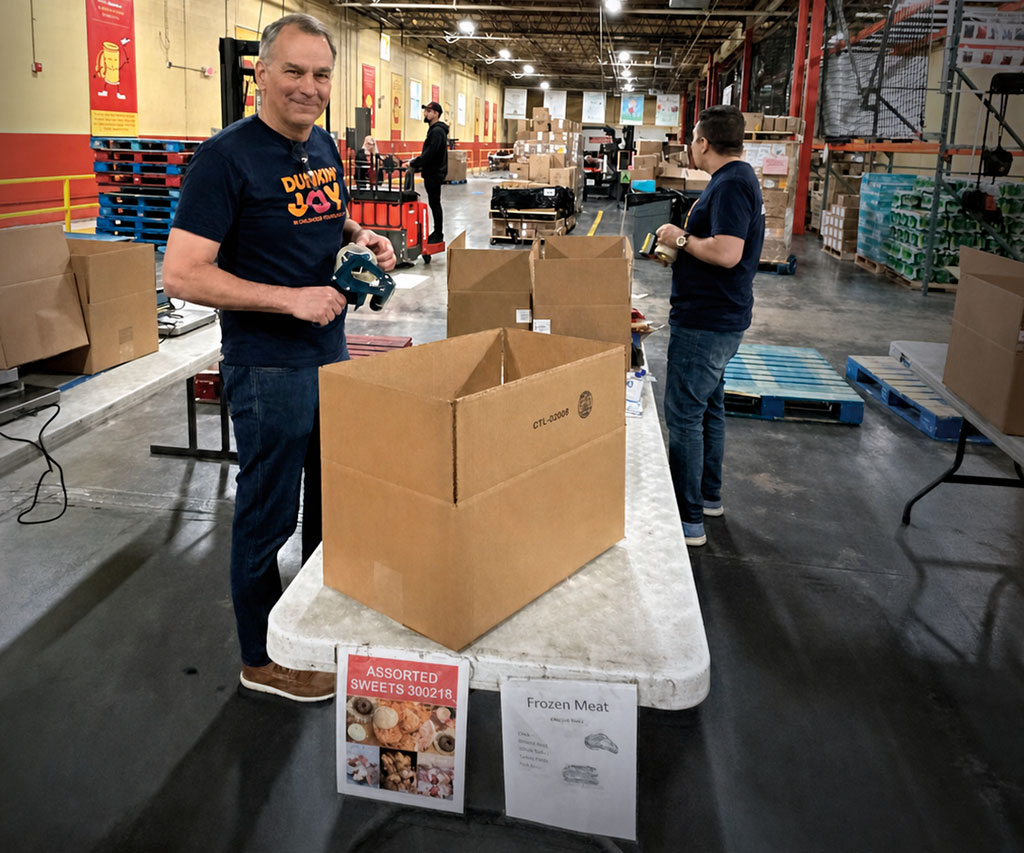
Key accomplishments: I over-index on empowerment and surrounding myself with good teams and good people. I have used my position and opportunities to do good in the world. I launched a donut fundraiser in partnership with the local Rotary Clubs with the motto “service above self.” It has raised nearly $9 million for polio research in the past eight years.
Biggest current challenge: We’ve built a great team, and it’s a constant challenge to keep providing personal and professional growth opportunities and to make sure people feel they are contributing and are valued.
Next big goal: Transitioning the leadership team and planning retirement. One of my personal goals is to shoot my age in golf.
First turning point in your career: I’ve had three careers and four turning points. While in college, I discovered that I wanted to run a business, and I pivoted from chemical engineering to include business classes. I left Procter & Gamble to run a small wholesale magazine business. The biggest turning point was leaving the wholesale magazine distribution business, a dying industry thanks to digital media, to start a Dunkin’ franchise.
Best business decision: I was fortunate that I got into Dunkin’ because it was really the first franchise I seriously looked into, and it was a top-10 brand that was expanding. Unlike the print media business, coffee isn’t going anywhere. When considering the challenges and risks, I decided Dunkin’ could be a great fit for me. I didn’t have to look into a ton of other brands.
Best advice you ever got: A friend once told me to be proactive instead of reactive in business. That requires planning, which means building a culture that produces high-performance teams that plan to be there instead of waiting for it to happen.
Hardest lesson learned: You can’t be so focused on a plan that you are ignoring changes that are occurring. There was very little inflation during the first 10 years of the business. We stuck with some of our original plans, and when things got more expensive, particularly on the construction side, I had some regrets. If I could do it over again, I would have been more on top of some of the financial changes that were taking place.
Work week: Two to three days of travel per week during the busy times (quarterly meeting cycles). The work week has changed a lot as I have transitioned leadership to a successor and started working toward retirement.
Exercise/workout: I have not taken the elevator to the fourth-floor office in three years. I try to be intentional about lifting weights and doing some cardio.
What’s your passion in business? Developing people and culture. I don’t want to just build a great culture and not have a bottom line; there needs to be a connection. I want to build a culture that results in a high-performing company. I like to do it with people and culture instead of the other ways people use to build a bottom line.
How do you balance life and work? It’s different from when I was building this business 17 years ago. I’m in a position where we have a high-performance team.
Guilty pleasure: Ice cream.
Favorite book: There are too many to choose. I lean heavily toward nonfiction books like Unbroken, history books like Undaunted Courage, and my favorite fiction is The Hunt for Red October. I am currently reading a history book about Abraham Lincoln and Stephen Douglas, The President and the Freedom Fighter.
Favorite movie: I’m not a big fan of movies, but I love a good series. I really enjoyed “Breaking Bad” and its spin-off, “Better Call Saul.”
What do most people not know about you? I’m not that mysterious. I’m currently learning the card game Duplicate Bridge.
Pet peeve: Indifference from employees toward our customers.
What did you want to be when you grew up? When I was 3, I wanted to be a bulldozer driver, and by the end of college, I wanted to be an entrepreneur.
Last vacation: I traveled to Turkey and Greece in October 2025.
Person you’d most like to have lunch with: Winston Churchill or Ben Franklin.
Management
Business philosophy: I probably over-index on people. I have the foundational thought that you can’t be successful over the long term without the right team and culture in place. Ultimately, I think it pays off.
Management method or style: To surround myself with talented people and empower them.
Greatest challenge: It is difficult to see things that I want to fix, but given the size of the organization, it’s not appropriate for me to get involved directly. What is the best way to convey high standards and performance expectations through a large organization and many leaders? I must weigh organizational efficiency and processes with the desire to fix things.
How do others describe you? As someone who is humble.
Have you ever been in a mentor-mentee relationship? What did you learn? Not formally but my business partner and longtime friend from college, Paul, is kind of like a mentor to me.
One thing you’re looking to do better: You are never as good as you can be, and there are always opportunities for improvement. We are constantly trying to make sure we have the very best processes in place. Processes become really, really critical.
How you give your team room to innovate and experiment: By empowering them. I’ve probably done this with fewer boundaries than I should have had. There are times when it can get out of hand, but I do believe it works. You need to have the right people so that you can assume positive intent.
How close are you to operations? Not very close anymore. As our organization has grown, my involvement has become further removed. If someone is still in the day-to-day operations when they have 100 stores, they’re probably not maximizing the opportunity. I have good people I trust. They keep me well informed on our operations, so I can provide feedback and represent the needs of Bluemont and the other Dunkin’ franchisees in our region on elected brand advisory committees.
What are the most important things you rely on from your franchisor? Marketing, product innovation, and brand protection.
What you need from vendors: Dependability and good results for a fair price.
Have you changed your marketing strategy in response to the economy? How? Dunkin’ believes there must be a value component to your whole product mix. By selling beverages, we can provide an inexpensive treat. We have a niche during tougher times.
How is social media affecting your business? Dunkin’ has been very innovative with social media and jumps on trends early.
In what ways are you using technology (like AI) to manage your business? Our team has worked with a company called PreciTaste to create a vision AI solution called Do’Cast for forecasting donut orders to reduce waste. We are just starting to test it, but there is much opportunity for it in the future.
How do you hire and fire? On a one-on-one basis and doing it thoughtfully and kindly. They don’t have to agree with my decision, but they should not be surprised.
How do you train and retain? They are related. Restaurateur Pal Barger talked about the importance of training 100% of employees to 100%. When he was asked about the affordability of training people to 100% only to have them leave, he responded, “What if you don’t train them to 100%, and they don’t leave?” This has always stuck with me.
How do you deal with problem employees? With respect and integrity. You must deal with it, and you can’t ignore it.
Fastest way into your doghouse: Indifference toward customers.
Bottom Line
Goals over the next year: We will continue to work through our succession plan for me at the Bluemont Group. I plan on being in the same role until the end of 2027 and then stepping back to be a board member.
Growth meter: How do you measure your growth? What’s important is comp sales and comp transactions for growth. Transactions are ultimately the sign of a healthy business. You can raise prices for sales growth, but that’s not sustainable in the long term.
Vision meter: Where do you want to be in five years? 10 years? Retired but still on the board for the company.
Do you have brands in different segments? Why/why not? No. It diverts focus. If I had started when I was younger and built up my Dunkin’ network, I might have a different opinion. Since launching the business with my partners, they have opened a family office to invest in a variety of businesses, but they always have a managing partner solely focused on that particular business.
How is the economy in your region(s) affecting you, your employees, your customers? Spending is down, costs are up, and cash flow is down because of the inflation of construction costs over the past few years. It’s interesting how you look at the business differently as you get bigger.
Are you experiencing economic growth in your market? We are in several markets, and over the years, we have seen great economic growth in some areas. For example, Rutherford County, which includes Murfreesboro, Tennessee, was one of the fastest-growing counties in population a few years ago. That growth helped us expand from one location to 10 in the county.
How do changes in the economy affect the way you do business? The economy exposes underlying issues that booming top-line sales will hide. When we started, I was personally doing site selection and expenditures, so we didn’t need a process to ensure we kept good discipline. As we got bigger, different people were responsible for development and unit growth and for managing spending. Controls got looser, but that didn’t really become obvious until the extreme inflationary period. So really, the economy forced us to reevaluate our processes.
How do you forecast for your business? We do a continuous five-year plan. The first year is the current year with a detailed budget, and then the next four years are adjusted as the second year becomes the current year, etc. When we first got started, we had a 20-year plan. It’s much easier to see a positive outcome with a 20-year look.
What are the best sources for capital expansion? The best is cash flow followed by sale-lease-back and then banking syndicates.
Experience with private equity, local banks, national banks, other institutions? Why/why not? Yes. The private equity experience is the family office of our partners. We stayed with local/regional banks for a long time. We decided to switch to syndicates to get a bigger investment for a more aggressive growth rate.
What are you doing to take care of your employees? We provide fair pay and good benefits. The challenge is being competitive but also being very careful because you can never take anything away. We want people to be really satisfied with our culture and our compensation package. I think our package is very competitive.
How are you handling rising employee costs (payroll, minimum wage, healthcare, etc.)? With healthcare specifically, we are evaluating how we can get better pricing out of the box. We’ve recently switched to Imagine360, a self-funded healthcare platform that uses a concierge service and reference-based pricing.
What laws and regulations are affecting your business, and how are you dealing with them? Tariffs have been hard. In our states, we are fortunate that we don’t have a lot of regulations, including required parental leave, variable start times, and advanced scheduling.
How do you reward/recognize top-performing employees? We do it through several ways such as public recognition, confetti cannons, a financial bonus program, and career development. We focus on internal promotion that publicly demonstrates that top performance leads to career growth.
What kind of exit strategy do you have in place? I have been working on my personal succession planning for the past few years and have put a great team in place. I am very comfortable that there will be life after me at Bluemont Group. There’s a certain amount of discipline you must have to make this transition. You need the right leader who is confident, and you have to be comfortable with decisions being made by someone else even if it’s not how you would have done it.
Share this Feature


Recommended Reading:


Franchising.com is produced by Franchise Update Media. Franchise Update Media has its finger on the pulse of franchising with unrivalled audience intelligence and market driven data. No media company understands the franchise landscape deeper than Franchise Update Media.
1201 New York Avenue NW, Suite 300A
Washington, DC 20005
PH. (408) 402-5681
 The multi-unit franchise opportunities listed above are not related to or endorsed by Multi-Unit Franchisee or Franchise Update Media Group. We are not engaged in, supporting, or endorsing any specific franchise, business opportunity, company or individual. No statement in this site is to be construed as a recommendation. We encourage prospective franchise buyers to perform extensive due diligence when considering a franchise opportunity.
Copyright © 2001 - 2026. All Rights Reserved. Legal Notices | Privacy Policy


