From Curbside to Cardio: Former Waste Operator Finds Fitness Success

Name: Paola Horvath
Title: Multi-Unit Franchisee
No. of units: 19 Orangetheory Fitness
Age: 52
Family: Husband, Jim, son, Lorenzo, 29, and daughter, Milana, 26
Years in franchising: 12
Years in current position: 12
The beginning of Paola Horvath’s career was trash. Literally.
Long before Horvath owned 19 Orange-theory Fitness studios, she and her husband, Jim, built a garbage collection business in upstate New York. They ran trucks, mapped routes, and worked directly with residents to provide monthly trash pickup services. After a decade of building the business, they merged with a larger local company that had partnered with private equity. The business was eventually sold to a large national waste company.
Horvath spent the next several years investing in startup companies and working with a business consultant to determine the next steps in her career. She discovered it on a trip to Florida, where she was introduced to Orangetheory Fitness. She took a class and was immediately impressed with the individual coaching during the workout. She noticed a sense of community and belonging among everyone in the studio.
Sensing an opportunity to bring the concept to her home state, Horvath purchased the licenses for three units in the Albany market and opened the first location in Niskayuna in 2015. Although she was new to the fitness industry, previous ownership experience and familiarity with a recurring revenue model helped with the transition. After opening the first three studios around Albany, she was approached by Orangetheory about taking over several corporate-owned locations in Rochester.
“Being a good operator pays off because you get the attention of the corporate office and those who are looking to retire or go down a different path and sell,” Horvath says. “We are usually approached rather than making the call ourselves. When the opportunity exists, we listen and see if it works with our growth path.”
Over the past decade, Horvath has steadily expanded her business, acquiring about half of her franchise locations along the way. She expanded to Buffalo in 2019, added three units coming out of Covid, and purchased five more two years ago. She acquired her first location outside New York in February with a studio in Massachusetts.
“It is always nerve-racking. You are adding more debt, more responsibility, and more people are counting on you,” Horvath says. “Sometimes, the location isn’t right next door, but having the team we have in place makes it work. I’m proud of our success and our growth. Without our team, we wouldn’t have been able to expand the way we have. Having a full bench and trusting in your people is what makes growth sustainable.”
Horvath manages the responsibility of running 19 units by visiting each studio as often as possible while holding weekly Zoom calls with leaders from each location. She is also committed to building a strong team and culture across each territory to optimize performance and support potential growth.
“I love what I do. I love this brand, and I cannot see myself stepping back anytime soon,” Horvath says. “This is not just a business to me. It is a passion.”
Personal
First job: I got my first job at 14, working as a cashier at a P&C supermarket.
Formative influences/events: My parents immigrated to the U.S. from Italy with my brother while my mother was pregnant with me. Italian was actually my first language. They did whatever it took to keep food on the table and a roof over our heads. Watching them work that hard without complaint shaped everything about how I approach business.
Key accomplishments: Every studio we have opened is a genuine accomplishment. Each one requires significant capital, months of preparation, and then the real work of building a membership base from scratch. I am especially proud of the studios we have acquired and turned around. Taking an underperforming location and transforming it into a thriving community is hard, risky work and deeply rewarding when it pays off. None of it would be possible without the people beside me. Building the right team and trusting the right people is its own kind of accomplishment.
Biggest current challenge: Rising operating costs, including rent, labor, and utilities, are a reality every business owner is navigating right now. Managing margins while still investing in our studios and our people takes constant attention. At the same time, it’s challenging to maintain a consistent culture and member experience across 19 locations. The energy and standards that make Orangetheory special must show up the same way in every studio, every day. As we have grown, that is something I think about and work on all the time.
Next big goal: More locations if the right opportunity presents itself. We have built a strong foundation and the infrastructure to support continued growth. But it is not just about adding studios. My goal is to keep growing the right way, maintaining the culture, developing the people around us, and making sure every new location opened or acquired lives up to the standard we have set. I believe deeply in where this brand is headed, and I want to be part of that story for a long time.
First turning point in your career: Selling our trash business was the turning point. We had built something really good over more than 15 years, and it would have been easy to stay with it. But we decided to leap into something totally new. Between selling the trash business and finding Orangetheory, my husband and I kept building. We did angel investing and went into real estate, purchasing shopping plazas and condo projects. Every venture taught us something new about business, risk, and what it means to grow. Then I took my first Orangetheory class in Florida, and that was it. I followed the prospect process and signed on in 2014. Sometimes, you have to trust yourself enough to make a big change even when it is scary.
Best business decision: Signing on with Orangetheory when I did. The brand was still early in its growth, and I believed in the product from the moment I experienced it as a member, and that passion has never faded. That gut instinct, backed by the due diligence I had developed as an entrepreneur, turned out to be exactly right. Watching our portfolio grow from that first studio in March 2015 to 19 locations today is something I never take for granted.
Hardest lesson learned: You cannot do it alone, and trying to do it is a mistake. The sooner you build a strong team and trust them, the faster everything grows. Learning to delegate and rely on the people around me was harder than I expected, but it has made all the difference. I have an incredible team and partners I could not do without.
Work week: Every day in some capacity. That is just the reality of owning 19 locations. But I would not have it any other way.
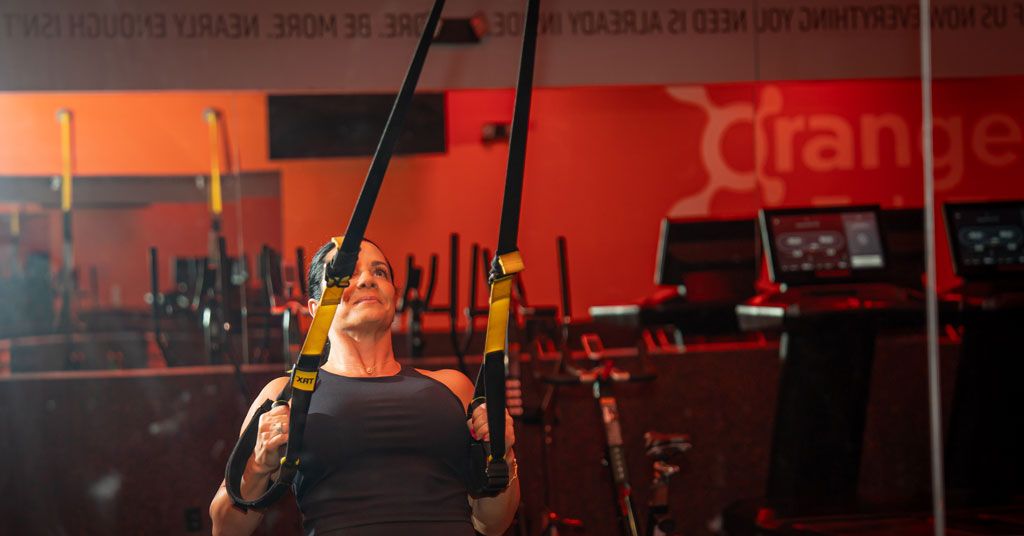
Exercise/workout: Four to five Orangetheory classes per week. I have logged more than 1,800 classes to date. Orangetheory gives me the perfect combination of strength and cardio in just 60 minutes. It is effective and efficient for my busy life, and I truly believe it is giving me longevity. The product works, and I am living proof. I am in the best shape of my life, thanks to Orangetheory Fitness!
Best advice you ever got: Stay consistent and be patient, especially during the down times. The operators who survive and grow are the ones who do not panic when things get hard. They just keep showing up.
What’s your passion in business? Building things. Whether it is a company, a team, or a studio community, I love taking something from zero and watching it grow. There is also something deeply satisfying about creating jobs and being part of people’s fitness journeys. That is a unique thing about this brand. Every member who walks through the door is there because they want to improve their life in some way. Getting to be part of that is a privilege.
How do you balance life and work? For me, work and life are not really two separate things. As a business owner, there are absolutely days and nights when you need to put your head down and get it done. But those hard moments are what make the good ones mean something. When I do get to step back and enjoy time with my family and friends, I am present for it because I know what it took to get there. Having a husband who works right alongside me makes all the difference too. It all flows together.
Guilty pleasure: Oreos. No explanation needed.
Favorite book: Unreasonable Hospitality by Will Guidara. It speaks directly to what I believe about business: that going above and beyond for people is not just good service; it is a mindset. I highly recommend it to anyone, no matter what business they are in.
Favorite movie: “Pretty Woman.” A classic.
What do most people not know about you? Italian was my first language. My parents emigrated from Italy, and English came later. It is not something that comes up often, but it is a big part of where I come from.
Pet peeve: Loud chewing in a quiet room. I cannot explain it. It just gets me every time.
What did you want to be when you grew up? I did not have a specific career in mind, but I clearly knew that I wanted to be successful and build something of my own. I watched my parents work so hard with their hands. I had tremendous respect for them, but I was driven to find a different path. That ambition was always there.
Last vacation: St. John in April 2026. It is a beautiful island.
Person you’d most like to have lunch with: My kids and my husband, all together. We used to look forward to family dinners regularly, but now that everyone is grown and living in different places, getting everyone around the same table is rare. That is the lunch I would choose every time.
Management
Business philosophy: Surround yourself with people who are better than you in their areas, give them what they need to succeed, and get out of their way. My job is to set the vision, remove obstacles, and show up consistently for my team. I also believe in doing things before you feel 100% ready. That feeling of readiness does not always come. You have to go for it.
Management method or style: I lead by example. That is the foundation of everything. If I expect hard work and consistency from my team, they need to see it from me first. I am very much a people-first leader. I care deeply about the people I work with, and I try to approach difficult conversations with empathy rather than just delivering hard truths. Being fair matters to me. Have high standards but always with heart. Consistency comes above all. I think the greatest thing you can be as a leader is someone your team can count on every single day.
Greatest challenge: Scaling a culture across 19 locations. It is easy to create a great team environment in one or two studios. Maintaining that across a growing operation, making sure every coach, every front-desk employee, every team leader, and every member feels the same energy, requires constant attention and investment in your people.
How do others describe you? I hope they would say I am hardworking, consistent, and someone who has their back. I have been told I am driven but down-to-earth, and I think that comes from building a business from scratch and knowing exactly what the grind feels like. I also hope people would say I am kind. You can be kind and still be strong. That is something I have had to prove more than once.
Have you ever been in a mentor-mentee relationship? What did you learn? I have had informal mentors along the way, people who took me seriously when others did not and whose example taught me what real leadership looks like. What I have taken away most is that presence matters. The people who influenced me most were not the loudest in the room. They were the most consistent and the most genuinely interested in the people around them.
One thing you’re looking to do better: Being more intentional about pausing to recognize milestones and celebrate what the team has accomplished. When you are driven, it is easy to hit a goal and immediately shift focus to the next one. I want to acknowledge progress, especially for my team. Great leaders do that well. I am actively working on it.
How do you give your team room to innovate and experiment? We hire people we trust and then let them do their jobs. We set the vision and the standards, but we do not micromanage the how. Some of the best improvements we have made have come from people on the ground seeing something we could not.
How close are you to operations? Very close. My husband and I are both actively involved in the business day-to-day. I came up through the trenches of building businesses from scratch, so I have a deep respect for what it takes to run things well on the ground. I trust my team completely, but I stay engaged and informed. I want to know what is happening, not just hear about it in a report.
What are the most important things you rely on from your franchisor? Trust, innovation, and clear communication. We need to know the brand is making decisions with the franchisee’s success in mind and that they are continuously evolving the product to stay ahead of what members want. When things change, we need to be informed promptly and brought along on the journey. Orangetheory has delivered on all of these, and that is a big part of why I remain so passionate about this brand after more than a decade.
What you need from vendors: Reliability and fair pricing. We need vendors who show up when they say they will and stand behind their product. In a business where the member experience is everything, we cannot afford vendors who are not dependable.
Have you changed your marketing strategy in response to the economy? How? We have gone back to basics, like when we opened our first few studios years ago. We use heavy grassroots, local marketing, events, workshops, and community activations that bring people through the door and let them experience the brand firsthand. We find the right balance across channels, but it is that small-business, boots-on-the-ground approach that has always worked for us. As we have grown to 19 locations, it has been important to keep that small-business feel, making sure every location and every teammate feels valued and connected. It is easier said than done at this size, but it is something we are intentional about every day.
How is social media affecting your business? It is significant. Social media is where potential members discover us and where current members share their experiences. We are fortunate to have talented teammates who have created amazing content that truly shows the culture of each location. That authenticity, real people and real energy, resonates far more than any polished ad ever could.
In what ways are you using technology (like AI) to manage your business? I am a bit old school, but AI has already been helping with small daily tasks in ways I did not expect. I am starting to explore what it can do, and I am genuinely excited to learn more. I look forward to finding ways to use it for operational efficiency as we continue to grow.
How do you hire and fire? We hire for attitude and train for skill. You can teach someone the job, but you cannot teach someone to care. Our operating partner is deeply involved in hiring and staffing decisions, particularly when it comes to our leadership teams. When it comes to letting someone go, we believe in being fair and humane. Nobody should be surprised by a termination if we have done our jobs as leaders.
How do you train and retain? Training is ongoing. It does not stop after onboarding. We invest in our coaches and staff because they are the product. Retention comes down to culture and making people feel valued. People stay where they feel seen and supported.
How do you deal with problem employees? Fortunately, the culture we have built means this is rarely an issue. When it does come up, it is handled directly but with empathy, understanding what is driving the behavior, having an honest conversation, and setting clear expectations. We believe in giving people the chance to course correct.
Fastest way into your doghouse: Not showing up and giving excuses. I would also say that presentation matters in this industry. We wear athletic uniforms, but we are fitness professionals, and how we show up reflects the brand. When our teams take pride in their appearance, that energy carries into everything, setting the tone for every member who walks through the door.
Bottom Line
Goals over the next year: Continued growth, expanding our portfolio where the right opportunity exists, and strengthening the performance of our current studios. We are always looking to improve the member experience and our team culture.
Growth meter: How do you measure your growth? We measure growth in multiple ways: membership numbers, studio performance, team development, and the health of our overall portfolio. Numbers matter but so does the quality of what we are building.
Vision meter: Where do you want to be in five years? 10 years? Still growing. We have some licenses for studios that we have not built, and we will add more locations. We will continue to add when the opportunity is right.
How is the economy in your region(s) affecting you, your employees, your customers? We feel the pressure of rising costs on the operational side. For members, we know fitness can be one of the first things cut when budgets tighten, so we work hard to reinforce the value of what they get. For our employees, we try to be mindful of their reality too.
Are you experiencing economic growth in your market? We are navigating the same headwinds as everyone else, but Orangetheory’s community aspect and results-driven model have proven resilient. Members who are invested in the brand tend to stay. For us, it’s the results and value that keep members showing up.
How do changes in the economy affect the way you do business? We are always watching our costs and looking for efficiencies without compromising the member experience. Economic shifts push us to be sharper operators, which ultimately makes us better.
How do you forecast for your business? We track membership trends, class utilization, and local market indicators closely. Past performance gives us a baseline, but we also pay attention to the broader economy and adjust accordingly.
What are the best sources for capital expansion? A combination of bank financing, reinvesting profits from the business, and personal financing when needed. Building strong relationships with banks early on has been important. We have always been thoughtful about taking on debt. Growth for the sake of growth is not the goal.
Experience with private equity, local banks, national banks, other institutions? Why/why not? We have stayed independent and financed our growth through a trusted local bank that invests in us both as operators and in the strength of the Orangetheory brand. That relationship has been invaluable. They know us, they believe in what we have built, and that makes all the difference.
What are you doing to take care of your employees? We have reorganized and built out more top-level support for our teams so that our leaders can do more, serve as mentors, and inspire their people to keep growing. We create an environment where people feel valued, heard, and supported. We provide competitive compensation, a positive culture, and genuine investment in their development. People need to know their work matters.
How are you handling rising employee costs (payroll, minimum wage, healthcare, etc.)? We are managing carefully and looking at scheduling efficiency and operational costs in other areas to make sure we compensate our people fairly.
What laws and regulations are affecting your business, and how are you dealing with them? Minimum wage increases are an ongoing reality, and like most operators in this space, we feel the pressure of that on our margins. We manage it by running lean where we can on the operational side with scheduling efficiency, vendor costs, and energy management. Beyond wages, we stay closely attuned to employment law changes across our operating areas because regulations can differ by state. We work with legal and HR advisors to make sure we stay ahead of compliance rather than reacting to it.
How do you reward/recognize top-performing employees? We give shout-outs for good performance in a large group chat across all our studios. We recognize positive achievements from entry-level to management roles.
What kind of exit strategy do you have in place? That is not something I am thinking about right now. We are still very much in growth mode, and I am as passionate about this brand today as I was when I signed on in 2014. But when that time comes, it would need to be something that truly works for my leadership team. It would have to value them and everything we have built together.
Share this Feature


Recommended Reading:


Franchising.com is produced by Franchise Update Media. Franchise Update Media has its finger on the pulse of franchising with unrivalled audience intelligence and market driven data. No media company understands the franchise landscape deeper than Franchise Update Media.
1201 New York Avenue NW, Suite 300A
Washington, DC 20005
PH. (408) 402-5681
 The multi-unit franchise opportunities listed above are not related to or endorsed by Multi-Unit Franchisee or Franchise Update Media Group. We are not engaged in, supporting, or endorsing any specific franchise, business opportunity, company or individual. No statement in this site is to be construed as a recommendation. We encourage prospective franchise buyers to perform extensive due diligence when considering a franchise opportunity.
Copyright © 2001 - 2026. All Rights Reserved. Legal Notices | Privacy Policy


